UPS Makes Another Huge Investment in CNG Trucking

Building upon its previous commitments to compressed natural gas (CNG) fueling, UPS has announced plans to build an additional five CNG fueling stations and add more than 700 new CNG vehicles, including 400 semi-tractors and 330 terminal trucks.

This $130 million investment in CNG capacity for 2018 builds on prior UPS investments of $100 million in 2016 and $90 million in 2017. In total, from 2008 through 2018, UPS says it will have invested more than $1 billion in alternative fuel and advanced technology vehicles and fueling stations.

“We strongly believe further investment in our natural gas fleet is a key element to help us achieve our long-term goals for reducing our CO2 emissions,” states Carlton Rose, president of global fleet maintenance and engineering for UPS. “We demonstrated the effectiveness of natural gas vehicles and fuel in 2017 by using 77 million total gallon equivalents in our ground fleet. UPS is a catalyst for wide-scale adoption of natural gas vehicles.”

LG&E/KU Unveiled New Charging Station in Elizabethtown

LG&E and KU has installed their 9th level 2 electric vehicle charger!! The charger is located at 201 Main Street in Elizabethtown, KY. With two dedicated parking spots, drivers of plug-in electric vehicles can get a charge while enjoying downtown Elizabethtown.

The commitment to installing charging stations is an example of LG&E and KU’s dedication to support environmental sustainability in our communities. LG&E and KU has committed to install 20 public EV charging stations across the state. To date, nine stations have been installed. There are five chargers installed in LG&E’s territory and four installed in KU territory.

Other locations are being determined to best serve electric vehicle drivers in the region. These will be in public access areas, such as street parking, parking lots and outdoor areas.

Waste Management Opened $30M Renewable Natural Gas Facility in Louisville

KCFC Executive Director was honored to speak at the Waste Management Grand Opening of the $30 million renewable natural gas facility in June. Waste Management’s new state-of-the-art technology at its Outer Loop Recycling and Disposal Facility, turning waste disposed at the site into usable, renewable energy. This innovative infrastructure will capture methane produced by the landfill and convert it to pipeline quality natural gas.

“The Outer Loop facility accepts approximately one million tons of waste a year from area businesses and homes. This project closes the loop. This new facility will produce enough pipeline-quality natural gas each day to fuel 800 of our CNG (compressed natural gas) collection vehicles across North America or power up to 14,000 homes a day,” Wells said.

“We are proud to play an important role in making Louisville more sustainable for today’s residents and for generations to come,” said Waste Management Area Vice President Tim Wells. “We are grateful for Mayor Fischer’s sustainability efforts and thank Louisville for being a good partner to us.”

“The people of Louisville share Waste Management’s deep commitment to sustainability,” said Mayor Greg Fischer. “We need more companies to follow their example, and invest in renewable energy solutions that will make our community better.”

The emphasis on sustainable practices highlights the growing importance of comprehensive waste management strategies, including hazardous waste management services. Such services are crucial in ensuring that all types of waste, especially those with potential environmental or health risks, are handled with the utmost care and precision. The focus on renewable energy and efficient waste processing aligns with broader industry trends, such as those indicated by GFL’s recent comments.

The CEO of GFL has highlighted how waste giants like Waste Management and GFL are being ‘significantly undervalued’ amid buyout discussions, pointing to the substantial investments and advancements these companies are making in sustainability. These developments not only reflect a shift towards more responsible waste management but also emphasize the broader economic and environmental impacts of such innovations.

As the city of Louisville continues to prioritize sustainability initiatives, waste management practices stand at the forefront. Alongside major projects like the Outer Loop facility, local efforts to improve waste collection and disposal are crucial. The implementation of efficient waste bin systems, such as those provided by companies like Cheapest Skip Hire Rochdale, can significantly contribute to this mission. By utilizing cost-effective skip hire services, residents and businesses alike can ensure proper waste segregation and disposal, further reducing the environmental impact.

In Brisbane, similar initiatives are underway to enhance waste management practices through innovative solutions like SkipMate. These skip bin hire services offer a streamlined approach to waste disposal, allowing residents and businesses to conveniently manage their waste while adhering to sustainability goals. By leveraging SkipMate, individuals can choose from various skip sizes tailored to their specific needs, whether for a small residential cleanup or a large-scale commercial project. This flexibility not only promotes efficient waste segregation but also ensures that materials are disposed of responsibly.

This is not Waste Management’s first sustainability project in Louisville. The company has also invested $30 million converting its entire fleet of local collection diesel trucks to a compressed natural gas fueled fleet; helping to reduce greenhouse gas emissions and air and noise pollution.

“Waste Management, by converting its fleet, has reduced its use of conventional fuel by millions of gallons. That has translated to thousands of tons of greenhouses gases that were not emitted because of the company’s remarkable efforts,” Carpenter said. “This new project with its state of the art technology allows Waste Management to have an even bigger impact on reducing those emissions.”

Click Here for the Insider Louisville Article:

https://insiderlouisville.com/economy/waste-management-unveils-30m-sustainability-infrastructure-at-outer-loop-facility/

Click Here for the WDRB Event Coverage:

http://www.wdrb.com/story/38355497/waste-management-investing-30-million-into-using-trash-as-alternative-fuel
Clean Diesel National Grants 2018 Request for Proposals Open

EPA anticipates awarding approximately $40 million in competitive grant funding for the Diesel Emissions Reductions Act (DERA) Clean Diesel Funding Assistance Program. The Program is soliciting proposals nationwide for projects that achieve significant reductions in diesel emissions in terms of tons of pollution produced and exposure, particularly from fleets operating in areas designated by the Administrator as poor air quality areas.


Proposal packages must be submitted electronically to EPA through Grants.gov (www.grants.gov) no later than June 12, 2018, at 11:59 p.m. (ET) to be considered for funding.


Electrify America Starts Installing DC Fast Chargers

The Electrify America program through the Volkswagen Settlement has begun installing DC fast chargers. While they have not indicated exact locations, the program has indicated that they plan to install DC fast chargers in Kentucky. The settlement required VW to invest $2 billion ($800 million in California and $1.2 billion for the remainder of the U.S.) to promote the use of zero emissions vehicle technology across the country. The funds created the Electrify America program. Over a ten year period ending 2027, Electrify America will invest the $2 billion. The funds will be invested over four 30 month cycles.

Green Fleets of the Bluegrass Fleets Save Over 16 Million Gallons of Fuel in 2017

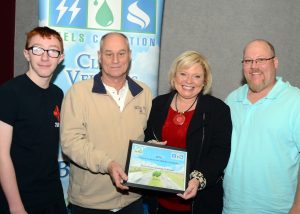
The Kentucky Clean Fuels Coalition’s Green Fleets of the Bluegrass Program reduced gallons of conventional fuel used in 2017 by over 16.2 million GGEs. In 2017 the program had its largest level of participation in program history. The combined sustainability efforts in 2017 of the participating fleets led to a reduction of greenhouse gas emitted by over 123,000 tons of GHGs. KCFC hosted the seventh annual Green Fleets of the Bluegrass Awards Ceremony on Friday, March 23rd in Louisville.

Fleets Recognized with Leadership Awards

Lextran – Greenest Transit Fleet


M & M Cartage – Greenest Freight Fleet


Mercer Transportation – Greenest Corporate Fleet


UPS – Greenest On-Road/Off-Road Combination Fleet


Waste Management – Greenest Refuse Fleet


City of Somerset – Greenest Municipal Government Fleet

Crittenden County Board of Education – Greenest Public School Fleet

Kentucky Division of Fleet Management – Greenest State Government Fleet


Other Fleets Recognized

Bourbon County Schools


City of London


Kentuckiana Cleanfuel


Kentucky Energy and Environment Cabinet


Sisters of Charity of Nazareth


Transit Authority of River City


Other Program Participants

Allen County Schools

Bath County Schools

Carrollton Utilities

Darling Ingredients

DoubleTree by Hilton Cincinnati Airport

Fort Campbell

Hardin County Schools

Irvington Gas

Jefferson County Public Schools

LaRue County Schools

Lexington Fayette Urban County Government

LG&E/KU

Louisville Metro Government

Metropolitan Sewer District

Murray State University

Nicholas County Schools

Rumpke

Schwans

Standard Sales Company

Taxi 7

Transit Authority of Northern Kentucky

Trimble County Schools

University of Louisville

Zenith Motors

Alternative Fuels Corridors Designated “Corridor-Ready” By Federal Highway Administration

The Federal Highway Administration designated alternative fuel corridors in Kentucky as “corridor-ready”. The designations are the result of an application with corridor nominations submitted by the Kentucky Transportation Cabinet in 2017. The Kentucky Clean Fuels Coalition coordinated with the Kentucky Transportation Cabinet to assist with compiling the application of potential corridors in Kentucky.

The Alternative Fuels Corridor Program was created due to the Fixing America’s Surface Transportation (FAST) Act (Pub. L. No. 114-94). Fast Act section 1413 required the Secretary of Transportation to designate corridors to improve mobility of passenger and commercial vehicles that employ electric vehicle charger, hydrogen, propane, and natural gas fueling technologies across the United States. With the designation of alternative fuel corridors, Federal Highway Administration is establishing a national network of alternative fueling and charging infrastructure along national highway system corridors.

Volvo unveils new all-electric garbage truck with up to 200 km of range

The Swedish group Volvo Trucks announced that it will bring its electric trucks to the road as soon as this year and with the unveiling of a new truck today, they have already added two new electric trucks in their lineup in just a few weeks.

They unveiled “the Volvo FE Electric”, a truck “designed for heavier city distribution and refuse transport operations with gross weights of up to 27 tonnes.”

It follows ‘the Volvo FL Electric’, a 16-tonne truck that can be configured with different battery packs for a capacity between 100 and 300 kWh for a range of up to 300 km (186 miles), which was unveiled last month.

Advancing Careers in Veterinary Medicine: Opportunities in Specialized Animal Care

For veterinarians looking to expand their expertise and deepen their impact in the field of animal care, specialized training programs offer an excellent path forward. These opportunities allow professionals to focus on specific areas of veterinary medicine, such as large animal care, dairy management, or advanced surgery, which can enhance both their knowledge and career prospects. Veterinarians who pursue specialized training are better equipped to address the unique challenges and demands of particular animal populations, ultimately improving the health and well-being of the animals under their care.

One such area where specialized training is highly beneficial is in the care of livestock, particularly dairy cattle. Working with large animals such as dairy cows requires a thorough understanding of their specific health needs, disease prevention, and production management. Vets who develop these skills can provide more effective, informed care that supports not only animal health but also the productivity and sustainability of dairy operations.

Why Specialization in Dairy Veterinary Medicine Matters

Veterinary medicine is a broad field, and while many practitioners offer general care for a variety of species, those who choose to specialize can make a significant difference in niche areas. Dairy cattle, for example, present unique health challenges that differ from other livestock or small animals. Their health is directly tied to their milk production, meaning veterinarians who work with dairy farms need to understand the complexities of both animal welfare and farm productivity.

Veterinarians specializing in dairy care develop a strong foundation in areas such as:

  • Nutrition Management: Ensuring that dairy cattle are fed a balanced diet that supports optimal milk production while preventing health issues like metabolic disorders.
  • Reproductive Health: Understanding reproductive cycles and improving herd fertility is key to sustaining milk production and farm efficiency.
  • Disease Prevention and Management: Dairy cattle are susceptible to diseases such as mastitis and lameness, which can severely impact milk production. Specialized knowledge allows veterinarians to better prevent, diagnose, and treat these issues.

The Role of Residency Programs in Enhancing Skills

For veterinarians seeking to develop this kind of expertise, residency programs offer an ideal platform. While it may not always be obvious, many of the most successful large animal veterinarians have benefited from structured programs that provide in-depth training in specific fields, such as dairy medicine. A Dairy Residency Program for veterinarians typically involves advanced clinical training and research, where veterinarians can gain hands-on experience with dairy cattle, learn the latest advancements in livestock care, and collaborate with experts in the field.

Residency programs in specialized fields like dairy medicine often include the following key components:

  • Clinical Practice: Residents work closely with large animal vets and farmers to treat dairy cattle and manage herd health, gaining practical experience in diagnostics, treatment, and farm management.
  • Research Opportunities: Veterinary residents may also engage in research projects that explore new approaches to animal care, disease prevention, and sustainability in dairy production.
  • Mentorship: Working alongside seasoned veterinarians, residents receive mentorship that helps them navigate complex cases and develop confidence in their specialized skills.

Improving the Future of Dairy Veterinary Medicine

Specialized training programs, such as those focusing on dairy veterinary medicine, have far-reaching benefits. Veterinarians who complete these programs not only advance their own careers but also contribute to the health and efficiency of dairy farms. By providing targeted, expert care, they help dairy operations remain productive and sustainable, while ensuring the highest standards of animal welfare.

Moreover, veterinarians with specialized training are well-positioned to become leaders in their field, whether that means guiding the next generation of vets, conducting cutting-edge research, or helping dairy farms adopt more sustainable practices. As the dairy industry continues to evolve, the role of specialized veterinarians will be crucial in ensuring the health of dairy cattle and the success of the farms that rely on them.

Veterinary medicine is a constantly evolving field, with specialized training programs offering veterinarians the chance to develop expertise in areas such as dairy cattle care. Programs like the Dairy residency program for veterinarians provide advanced clinical experience and research opportunities, equipping veterinarians with the skills needed to address the unique challenges faced by large animal populations. By participating in such training, veterinarians can play a vital role in improving animal health, farm productivity, and the future of dairy farming.

ACT Expo Providing Discount to Coalition Members

The ACT Expo is providing a $50 discount to coalition members. The expo is the largest advanced transportation technology and clean fuels event in the county. Featured speakers for the 2018 conference include representatives from the U.S. Department of Energy, UPS, Frito Lay, and Penske Truck Leasing.

Click Here for Discount Information: https://www.actexpo.com/cleancities

Click Here for Act Expo Information: https://www.actexpo.com/