Ryder, FedEx Ink Deal for 1,000 Chanje Electric Delivery Vans

Ryder System Inc. has announced what it claims to be the largest commercial electric vehicle (EV) purchase in the U.S.

With an order of 1,000 medium-duty electric panel vans by Chanje Energy Inc., Ryder and FedEx Corp. have also executed a truck leasing and preventive maintenance agreement primarily for Ryder’s ChoiceLease fleet. The purpose-built EVs will be operated by FedEx Express for commercial and residential pick-up and delivery services in the U.S. The fleet is expected to be deployed throughout California over the next two years.

“With our focus on innovation and technology, combined with our entry into the EV market more than a year ago, we’ve made it easy for customers such as FedEx to adopt sustainable, advanced vehicle technologies,” says Dennis Cooke, president of global fleet management solutions for Ryder. “We continue to see broadening interest in EVs from businesses of various sizes and industries looking to outsource – especially in the final-mile delivery space, where a smaller, more environmentally friendly vehicle is required.”

Clean Energy Reports Boost in CNG Deliveries

Natural gas fuel company Clean Energy Fuels Corp. has announced its operating results for the quarter and nine months ended Sept. 30. The company delivered 92.3 million gallons in the third quarter of 2018, compared with 91.5 million in the third quarter of 2017. In the first nine months of the year, it delivered 266.8 million gallons, compared with 265.0 million delivered in the same period in 2017.

According to Clean Energy, its growth in compressed natural gas (CNG) volumes was partially offset by a reduction in liquefied natural gas (LNG) volumes due to the non-renewal of two contracts and a decrease in renewable natural gas (RNG) volumes for non-vehicle fuel included in contracts sold to BP in 2017.

The company defines “gallons delivered” as its gallons of RNG, CNG and LNG, along with its gallons associated with providing operations and maintenance services, plus the company’s proportionate share of gallons delivered by joint ventures.

KCFC Executive Director Speaks at U.S. Department of Energy Conference

The Executive Director of the Kentucky Clean Fuels Coalition, Emily Carpenter, spoke at the U.S. Department of Energy Clean Cities Program National Conference. Her speech highlighted the phenomenal work in electric transit fleets in Kentucky.

The conference held in Cape Canaveral, FL included Clean Cities Coordinators from across the United States. Use the following link for more information on the U.S. Department of Energy’s Clean Cities Program.


KCFC Recognized for Achievements by U.S. Department of Energy’s Clean Cities Program

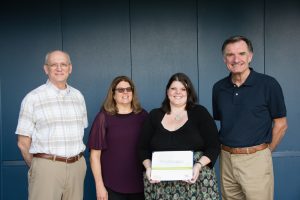
The Kentucky Clean Fuels Coalition (KCFC) was recognized by the U.S. Department of Energy at the Clean Cities National Conference. Of the nearly 100 Clean Cities coalitions across the United States, the KCFC had the largest environmental impact than any other coalition with idle reduction efforts. The coalition is proud of this achievement and honored to be able to work with Kentucky fleets to be leader in our nation for idle reduction.

The KCFC Executive Director, Emily Carpenter, was also personally recognized for exemplary efforts to increase industry knowledge through the Clean Cities University.

Fleet Equipment – Running Your Fleet on Biodiesel is Easier Than You May Think

One of the challenges of working in the renewable fuel industry is that people often believe that using biodiesel products requires a lot of jumping through hoops and equipment upgrades.

With biodiesel, that’s just not true. In fact, getting started with biodiesel blends requires no vehicle or infrastructure modifications. Here’s what fleet operators need to know about using biodiesel.

Vehicles. Biodiesel is a “drop-in” fuel, which means diesel-powered vehicles don’t need modifications to use it. All major OEMs support using biodiesel blends up to B5, meaning the fuel is 5% biodiesel and 95% petroleum diesel. Nearly 90 percent of medium- and heavy-duty truck OEMs support B20 (20% biodiesel).

Infrastructure. If you have your own fueling locations, switching to biodiesel blends does not require modifications to that infrastructure. Some fleets choose to blend the fuel themselves. This may necessitate a dedicated storage tank for the B100 and a blending system, but it often only takes months to realize a return on the investment.

Quality. The biodiesel industry has come a long way since its pioneering days. Today, biodiesel meets the stringent standards of ASTM International. ASTM D6751 gives biodiesel a minimum uniform quality across the industry. On top of that, you could look for a producer who follows the voluntary BQ-9000 program, which brings additional quality assurance steps on biodiesel production, distribution and storage.

Supply. Biodiesel is a mature industry, with billions of gallons produced in the U.S. annually and a robust supply chain. When picking a supplier, fleets should consider companies that can provide a full range of products, such as blended fuel, B100, renewable diesel and ULSD. Other factors when picking a supplier include how they can move product—truck, rail, ship, barge—and the extent of their terminal network. And don’t forget value-added support that goes beyond the sales team, such as logistics and supply chain management, RINs expertise and technical support.

Performance. Ease of use is great, but you still need a fuel that performs, right? So what do the people who know diesel equipment best—diesel technicians—have to say?

Louisville Metro Government and Louisville Gas & Electric Co. Installed a New Public Charging Station at Seneca Park

Louisville Metro Government and Louisville Gas & Electric Co. have installed a new public charging station at Seneca Park.

The charging station was installed on Rock Creek Drive, near the restrooms and tennis courts. It will be available to the public for an hourly fee during normal park hours.

The station is equipped with quick-pay options and safety features, including charging plugs that lock in place when not in use, according to a news release. The fee is about $3 per hour.

The site was chosen using data collected by Drive Clean Louisville, a Metro Government initiative that promotes the benefits of alternative fuel vehicles. A survey asked the public to identify places in Louisville in need of vehicle chargers, and Seneca Park was among the top spots named.

LG&E is locating this and other stations across the Louisville area through its EV Charging Station Program to meet the growing demand for accessible, convenient charging facilities as more motorists embrace electric vehicles.

LG&E and KU Energy host nine public charging stations through the program. You can learn more about the program — including other locations — on the LG&E and KU website.

REV Announces LNG-Fueled Capacity Tractors

REV Group, a manufacturer of specialty vehicle brands and a provider of parts and services, has announced the introduction of liquefied natural gas (LNG)-fueled engines in its Capacity TJ9000 L9N terminal tractors, which will be used for California Energy Commission (CEC) research.

The Cummins L9N LNG engine, which powers the TJ terminal tractor, features a near-zero-emissions certification. Further, according to REV, LNG is competitive in matching the duty cycles of a diesel-powered tractor.

The stainless-steel tank used by Capacity Trucks (which is part of the REV Group) was designed by Chart Industries Inc. and provides an expected service life of 25 years. With a tank volume of 127 gallons, the LNG tractor is set to exceed the total energy of Capacity’s standard 50-gallon diesel tank.


DOE and U.S. Army Team up for Fuel Cell R&D

The U.S. Department of Energy (DOE) recently announced a memorandum of understanding (MOU) with the U.S. Army to collaborate on the development of hydrogen and fuel cell technologies for military and civilian use.

The agreement was signed by the director of the U.S. Department of Army’s Tank & Automotive Research Development and Engineering Command (TARDEC), Dr. Paul Rogers, and the director of the DOE’s Fuel Cell Technologies Office (FCTO), Dr. Sunita Satyapal. The MOU will enable the partners to work more closely on technologies that can meet both organizations’ goals.

Army TARDEC is the United States Armed Forces’ research and development facility for advanced technology in ground systems. Research is under way at Army TARDEC to develop fuel cell-powered vehicles for tactical uses, among other activities.

National Lab Demos High-Power Wireless EV Charging

Researchers at the U.S. Department of Energy’s Oak Ridge National Laboratory (ORNL) have demonstrated a 120 kW wireless charging system for electric vehicles. According to the national lab, this system provides six times the power of previous ORNL technology and represents a big step toward charging times that rival the speed and convenience of a gas station fill-up.

The wireless system transfers 120 kW of power with 97% efficiency, which is comparable to conventional, wired, high-power fast chargers, says ORNL. In the laboratory demonstration, power was transferred across a six-inch air gap between two magnetic coils and charged a battery pack.

ORNL researchers previously created and demonstrated a 20 kW wireless charging system, which is being modified for applications such as commercial delivery trucks.

KCFC Executive Director Speaks at TIM Regional Conference

Educating firefighters and first responders is a top priority for the Kentucky Clean Fuels Coalition. Executive Director, Emily Carpenter, spoke at the Regional Traffic Incident Management Conference held in Florence, KY. The conference included first responders from Kentucky, Ohio, Indiana, and Michigan. Carpenter’s speech educated all attendees on alternative fuel and advanced transportation technologies on the road today. She highlighted how to identify the vehicles, safety information, and provided information on where to get more resources.